The Flaws of Cryptocurrency Market Cap Calculations
John Barry | Wed Mar 11 2026
Market capitalization is one of the most widely cited metrics in the cryptocurrency industry. Investors, exchanges, and media outlets frequently use it to rank projects and determine their perceived size and importance. The formula appears simple: Market Cap = Current Price × Circulating Supply. However, while the calculation itself is straightforward, the result can often be deeply misleading.
The core problem is that market capitalization assumes that the last traded price represents the value of the entire supply. In reality, most tokens trade with extremely thin liquidity. A small number of transactions can determine the quoted price, even though the market could never absorb the sale of the full circulating supply at that price. As a result, market caps frequently give the illusion of massive value creation when, in practice, only a tiny fraction of the supply has actually traded.
Liquidity: The Missing Variable
Traditional financial markets rarely face this issue because large-cap stocks trade on highly liquid exchanges with deep order books. Cryptocurrency markets are very different. Many tokens trade only on a few exchanges or decentralized liquidity pools with limited trading activity.
When liquidity is thin, a small trade can move the price significantly, artificially inflating the market cap calculation. In some cases, projects can appear to be worth hundreds of millions or even billions of dollars despite very limited trading activity.
The Tokenize Xchange Collapse
The collapse of Tokenize Xchange illustrates another flaw in how the crypto market evaluates value. When the Singapore-based exchange shut down, court-appointed managers determined the company was “heavily insolvent” with about S$267 million in liabilities owed primarily to customers.
Despite the apparent activity on the exchange before its closure, the financial reality behind the platform was dramatically different. Thousands of customers were left unable to withdraw funds after operations ceased, highlighting how apparent market activity does not always reflect the underlying financial condition of a platform or token ecosystem.
As of March 11 2026, Tokenize Xchange is still ranked #251 on CoinGecko, despite the exchange entering liquidation proceedings and being described by court-appointed managers as heavily insolvent.
The Fasttoken Example
Another case that highlights the limitations of market cap calculations is Fasttoken (FTN). On September 20th, 2025 Fasttoken was trading at $5.50 on multiple cryptocurrency exchanges. After one of the larges rug pulls in history, Fasttoken was delisted from every cryptocurrency exchange expect for one: Fastex. Fasttoken (FTN) was created as the native utility token for the Fastex ecosystem, which includes the Fastex centralized exchange.
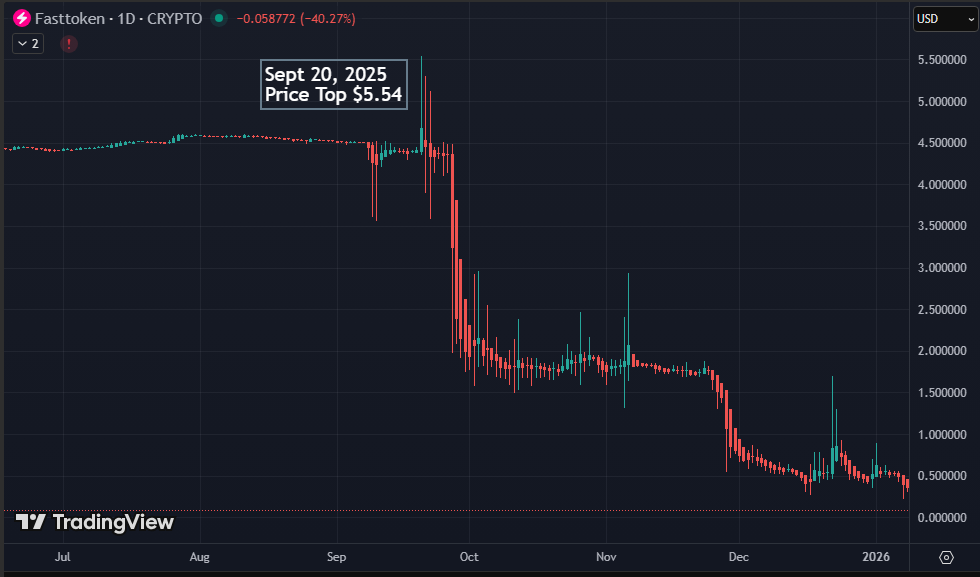
The last executed price of Fasttoken on Gate.io was $0.08, before it was delisted, Gate.io was the last exchange besides Fastex to trade Fasttoken ($FTN). Fastex continues to trade Fasttoken at $1.08 on March 11, 2026. Learn more about the Fasttoken collapse with this link https://quantifycrypto.com/blog/why-is-nobody-talking-about-the-largest-rug-pull-in-history-
On March 11th, 2026 Coingecko continues to rank Fasttoken #100 while Coinmarketcap has Fasttoken ranked at #209.
Market cap is calculated from the latest available price, the Tokenize and Fasttoken continue to maintain a large marketcap valuation even if very little real trading volume supports that price.
A Better Way to Evaluate Crypto Projects
While market capitalization can still serve as a rough comparison tool, often it just shows the tip of the iceburg and should never be used alone to determine the true value of a cryptocurrency project. Performing proper due diligence is essential, and in-depth research sources such as the Quantify Crypto Research Reports can provide valuable analysis to help investors better understand the underlying fundamentals behind leading cryptocurrency projects.