Your Guide to IPOs Coming Up and Their Investment Potential
Press Release | Mon Aug 03 2026
Every investor dreams of identifying an opportunity before it becomes the next big success story. While the stock market offers countless investment options, some of the most exciting opportunities emerge when companies first open their doors to public investors.
IPOs coming up have become a major point of interest for both seasoned investors and beginners looking to diversify their portfolios. An Initial Public Offering (IPO) allows a private company to raise capital by offering its shares to the public for the first time. For investors, it presents a chance to participate in a company's growth journey from an early stage. However, understanding how IPOs work and evaluating their investment potential is essential before making any financial commitment.
Understanding IPOs
An Initial Public Offering marks the transition of a privately owned company into a publicly traded one. Through this process, businesses raise funds from public investors to support expansion, research, acquisitions, debt repayment, or other strategic objectives.
Once listed on a stock exchange, the company's shares become available for trading. Investors can buy and sell these shares based on market demand, company performance, and overall economic conditions.
The IPO process typically involves investment banks, regulatory approvals, company valuations, and extensive disclosures that help investors understand the company's financial position and future prospects.
Why Companies Choose to Go Public
Although becoming a publicly listed company comes with additional compliance requirements, many organisations view it as an important milestone for long-term growth. Going public offers several advantages to businesses beyond simply raising capital.
Some of the key reasons include:
- Access to larger pools of capital for expansion
- Improved market visibility and brand recognition
- Greater credibility among customers and business partners
- Liquidity for existing shareholders and early investors
- Opportunities to attract top talent through stock-based compensation
Why Investors Are Interested in IPOs
IPO investments often generate significant excitement because they provide early access to companies with promising growth prospects. Many successful companies have delivered substantial long-term returns after their public listing, making IPOs attractive to investors seeking future growth.
Some potential advantages include:
Early Growth Opportunities
Investors who participate during the IPO stage may benefit if the company performs well after listing and continues expanding over the coming years.
Portfolio Diversification
Adding newly listed companies can diversify an investment portfolio across industries and business models.
Potential Listing Gains
In some cases, strong investor demand results in the share price rising significantly on the listing day, providing short-term gains.
Long-Term Wealth Creation
Companies with strong fundamentals, innovative products, and sustainable business strategies may continue delivering value for shareholders over an extended period. However, it is important to remember that not every IPO guarantees positive returns.
Factors to Evaluate Before Investing in an IPO
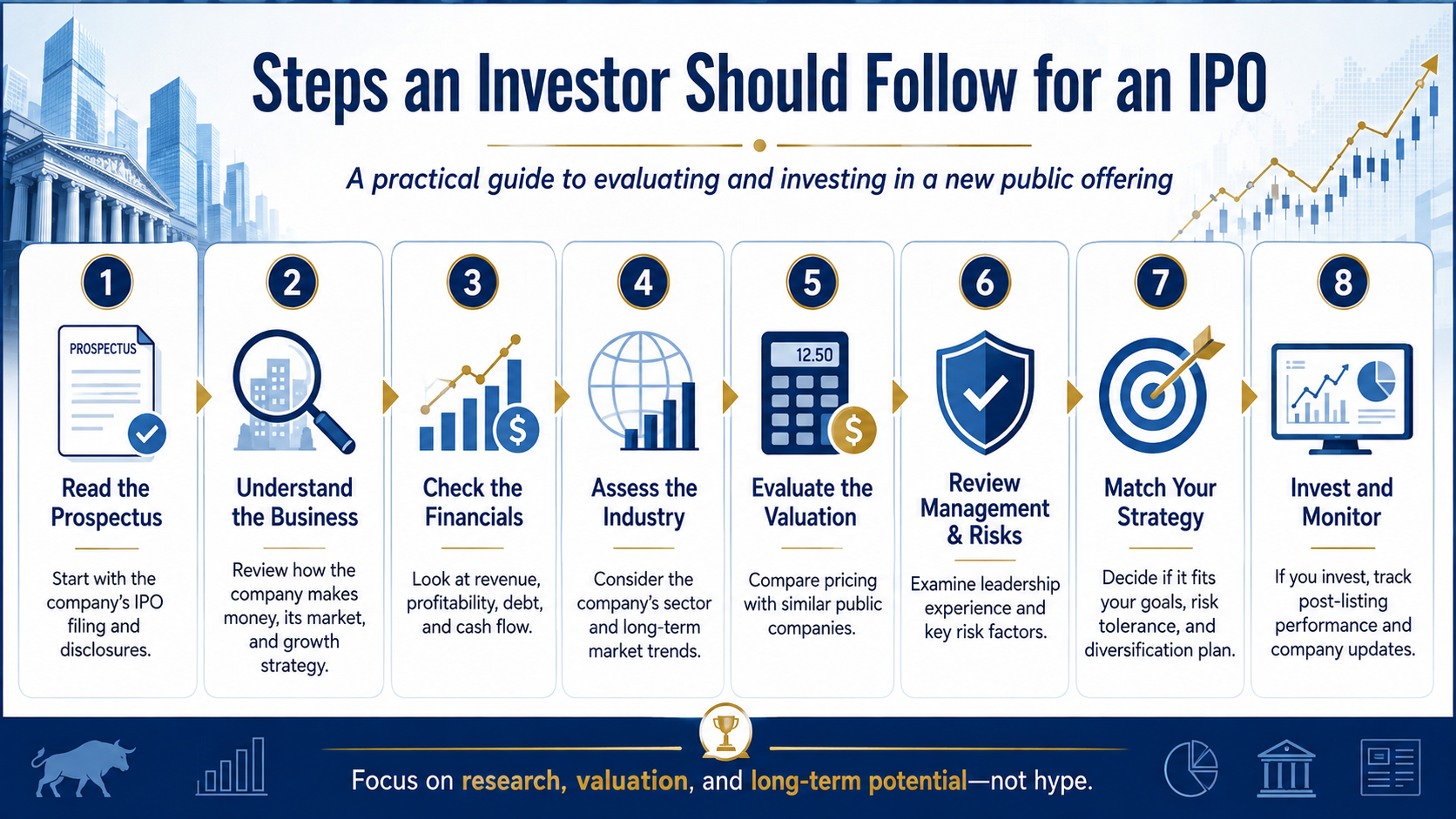
Successful investing requires careful research rather than following market excitement. Before investing in any IPO, consider several important factors.
Company's Business Model
Understand how the company generates revenue, its target market, competitive advantages, and future growth strategy. A business with a scalable and sustainable model generally offers stronger long-term potential.
Financial Performance
Review the company's financial statements, including revenue growth, profitability, operating margins, debt levels, and cash flow. Consistent financial performance often reflects operational stability.
Industry Outlook
The company's industry plays a significant role in determining future growth. Businesses operating in expanding sectors such as technology, healthcare, renewable energy, or financial services may benefit from broader market trends.
Valuation
An attractive company may not necessarily be an attractive investment if its IPO valuation is excessively high. Compare valuation metrics with similar publicly listed companies to determine whether the pricing appears reasonable.
Management Team
Strong leadership is one of the most valuable assets of any organisation. Evaluate the experience, credibility, and track record of the company's promoters and senior management.
Risk Factors
Every IPO prospectus outlines potential risks. These may include regulatory challenges, intense competition, customer concentration, legal issues, or economic uncertainties. Reading these disclosures helps investors make informed decisions.
Common Risks Associated with IPO Investments
While IPOs offer attractive opportunities, they also involve certain risks that investors should understand. One of the biggest challenges is limited historical market performance. Since the company is newly listed, investors cannot analyse long-term stock price behaviour.
Market volatility may also affect newly listed shares. Even fundamentally strong companies can experience significant price fluctuations shortly after listing due to investor sentiment and market conditions. Additionally, future business performance may differ from initial projections, making continuous monitoring essential after investing.
How to Build a Smart IPO Investment Strategy
A balanced strategy reduces emotional decision-making and encourages informed investment choices. Rather than investing based solely on popularity or media attention, develop a disciplined approach.
Consider the following best practices:
- Research the company's prospectus thoroughly.
- Compare valuations with industry peers.
- Assess long-term growth potential rather than focusing only on listing gains.
- Diversify investments instead of allocating all funds to a single IPO.
- Invest according to your financial goals and risk tolerance.
- Monitor post-listing performance and company updates regularly.
Should Beginners Invest in IPOs?
IPOs can be suitable for beginners, provided they understand the associated opportunities and risks. New investors should focus on companies with transparent business models, healthy financials, experienced leadership, and realistic valuations.
Instead of chasing every new public offering, beginners may benefit from selecting only those companies that align with their long-term investment objectives. Seeking professional financial advice can also help first-time investors evaluate whether a particular IPO fits their investment profile.
Final Thoughts
The stock market continues to evolve with new businesses entering the public domain every year, creating exciting opportunities for investors. While participating in an IPO can be rewarding, success depends on careful research, patience, and disciplined decision-making rather than market hype.
By understanding company fundamentals, industry trends, valuation, and associated risks, investors can make more informed decisions when evaluating new opportunities. Keeping a close watch on the latest public offerings and analysing them objectively can help identify investments with genuine long-term growth potential. As you explore IPOs coming up, remember that informed investing is always more valuable than impulsive investing, laying the foundation for a stronger and more resilient investment portfolio.
Disclaimer:
This content was provided as a press release to Quantify Crypto